CLOVERPIT AND THE COMPULSION LOOP REGULATORS CAN'T TOUCH
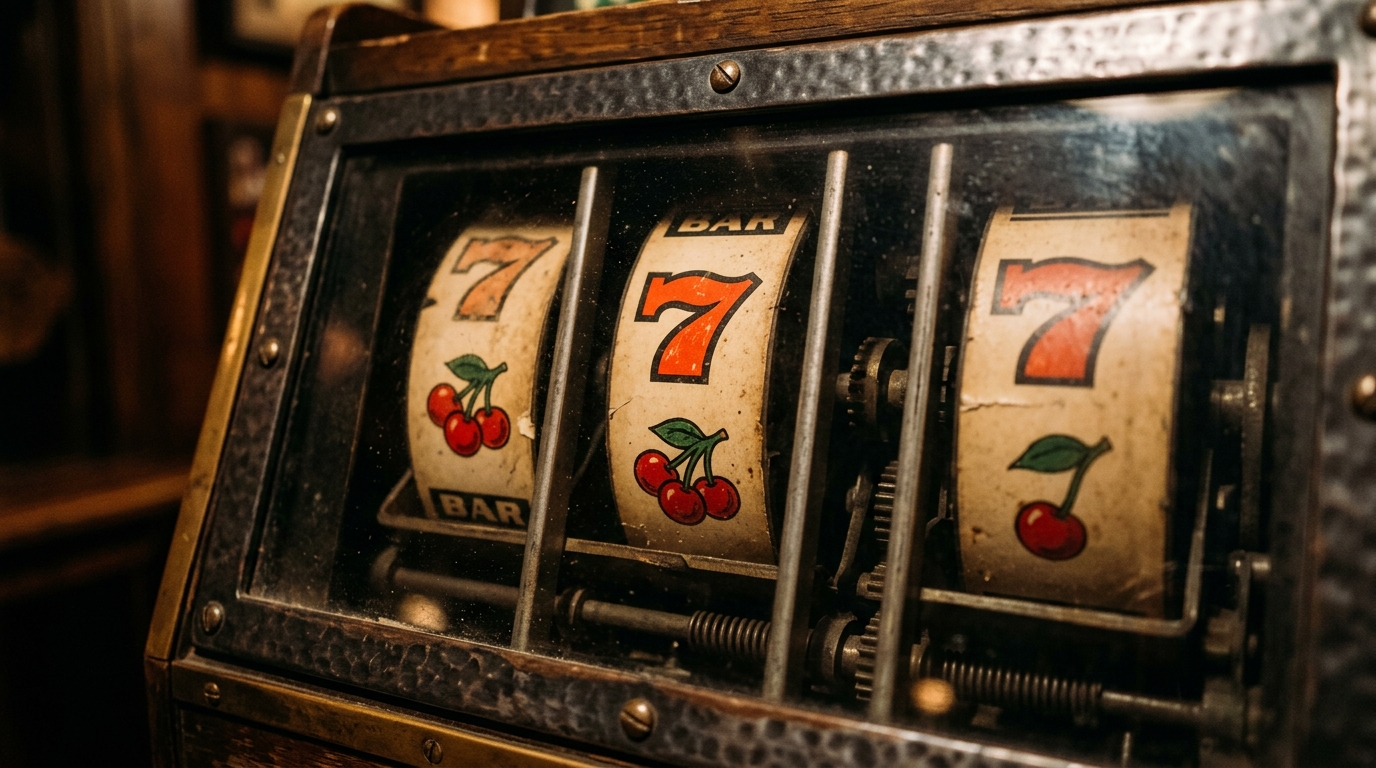
There's a game where you're locked in a rusty cell with a slot machine and an ATM, and if you don't deposit enough money by the end of the round, the floor opens up. Its own store page asks whether this is gambling and answers "Hell no," on the grounds that it's a rogue-lite horror game, the slot machine is designed to be broken, and it will never ask for real money.
That disclaimer is doing a lot of work, and it's also completely correct. Which is the problem.
The loot box fight was about the receipt
Every regulatory instrument built during the loot box decade keys on the same thing: a payment attached to a random outcome. Belgium's Gaming Commission classified paid loot boxes as gambling in 2018, applying the rule to paid random-outcome mechanics regardless of whether the prize is digital or physical. The Dutch regulator fined EA €10 million over FIFA Ultimate Team packs in 2020, and the highest Dutch administrative court overturned it in 2022 on the reasoning that the mechanic was tied to a game-of-skill base product. The UK Gambling Commission's position has been that FUT packs aren't gambling because the rewards can't be cashed out.
Consideration, chance, prize. Three legs. Knock out any one and the framework has nothing to grab.
Now notice what none of those tests measure: whether the thing is engineered to keep you pulling. Variable-ratio reinforcement, near-miss animations, escalating debt targets, the cascading payout sequence that stretches a win across four seconds of noise. None of that is regulated anywhere. It was never the target. It was collateral damage from a fight about children's credit cards.
So the enforcement lands on the wrong games
Here's the falsifiable version of my claim: enforcement in this space tracks the payment, not the psychology, and it does so badly enough that the games getting punished are the ones with no payment at all.
PEGI slapped Balatro with an 18 rating on the reasoning that it teaches skills and knowledge transferable to a real-life game of poker, despite the game having no microtransactions and no in-game currency. Its developer's response was that he was more bothered by the 3+ ratings on games with actual gambling mechanics aimed at children. PEGI later reversed to a 12 on appeal, citing "mitigating fantastical elements."
Meanwhile Luck Be a Landlord, a paid indie with no microtransactions, was pulled from Google Play in thirteen countries, and its developer eventually filled out Google's questionnaire agreeing his game "contains gambling" purely to avoid a global ban, after appeals produced nothing but a screenshot of his game and the assertion that it was gambling.
A one-time $10 purchase gets geo-blocked. A free-to-play title selling randomized card packs to teenagers keeps its 3+ badge. That isn't hypocrisy so much as a system doing exactly what it was designed to do, which is look for a specific transaction shape and ignore everything else.
What CloverPit actually demonstrates
CloverPit isn't the villain here. It's the proof of concept. Aftermath's write-up noted that the game insists it isn't gambling, which in the basic sense is true because no money is involved, and that forcing the player's attention onto slot machine mechanics is arguably the point, though the same piece admitted the writer's brain read it as a slot machine anyway, and that pulling the lever stayed terribly compelling. Steam users have it at 90% positive across more than 12,000 reviews.
So: the full casino grammar, decoupled from the casino economics, and it works. Players report the pull. Critics report the pull. Reviewers describe it as an addiction allegory that is itself hard to put down, which is either brilliant design or an uncomfortable joke depending on your mood.
That decoupling is the industry lesson, and it's already been learned. You do not need a paid random draw to build the loop. You need the reels, the near miss, the escalating quota, and the sound design. Monetization can be attached somewhere else entirely: a battle pass, rewarded video, a cosmetic store, a sequel. None of those trip a gambling statute, because there's no chance element in the purchase itself.
The strongest objection, and where it holds
The obvious pushback: no money, no harm. CloverPit is a fixed-price single-player horror game with an ending, and a slot machine built to be broken. Every roguelite ever made runs on variable reward. Hades runs on variable reward. If compulsion alone is the standard, you've banned the genre.
That's right, and it's why I'm not asking anyone to regulate CloverPit. The argument isn't that these games are dangerous. It's that they've publicly demonstrated the psychology travels alone, and the frameworks built between 2017 and now cannot see it. The European Parliament's November 2025 resolution urged the Commission to outlaw loot boxes in games accessible to minors, with a Digital Fairness Act expected to require a ban or parental consent. Every word of that is about purchases.
The test for whether I'm wrong is simple. Find one regulator, anywhere, that sanctions a game for compulsion-loop design in the absence of a paid random draw. Until that happens, the outrage cycle is guarding a door the industry stopped using.