SONY IS KILLING NEW GAME DISCS IN 2028. THE PROBLEM ISN'T NOSTALGIA, IT'S ACCESS
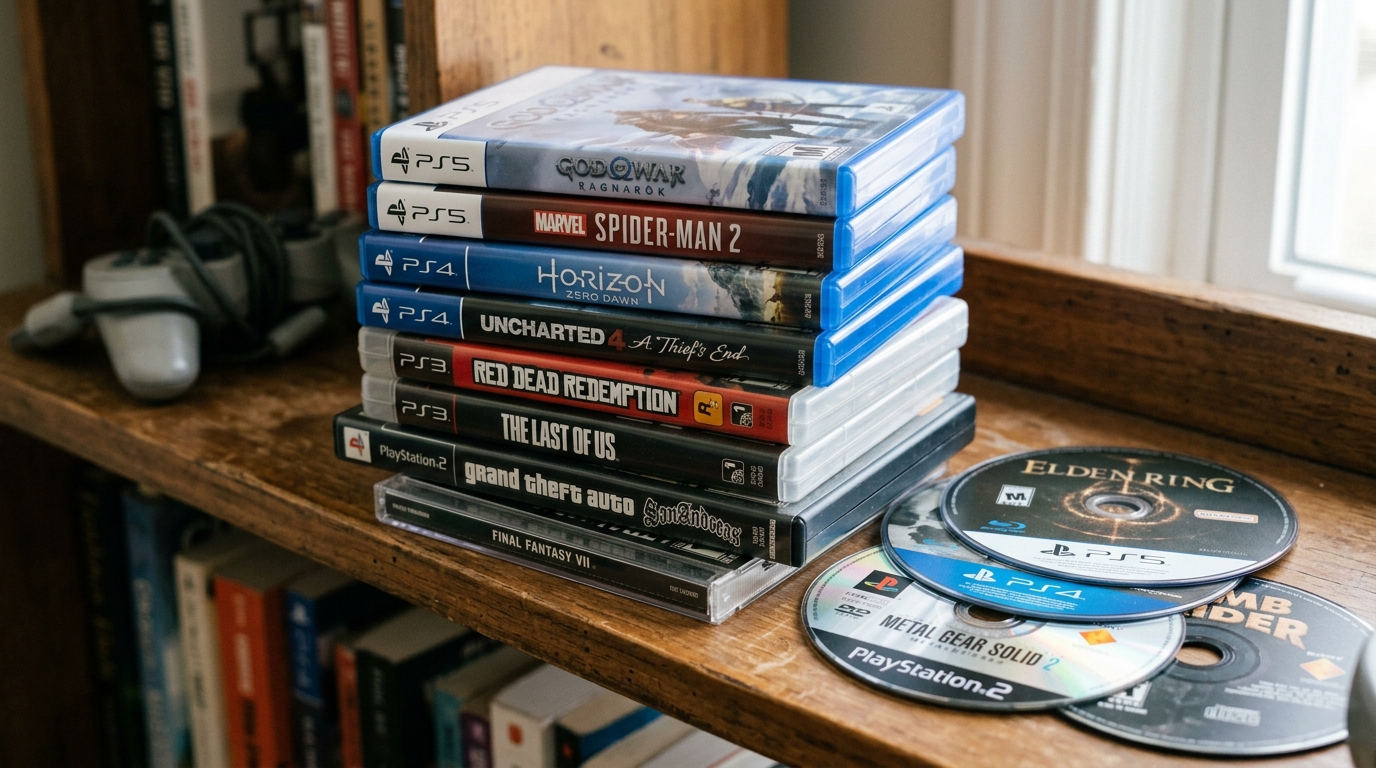
The headline reads like a shock, but nobody who's watched a GameStop shelf shrink over the last five years should be surprised. Sony PlayStation said Wednesday it plans to end production of new video game discs, a feature of the media and entertainment landscape for three-plus decades, by January 2028. After that, the format that PlayStation itself dragged into the mainstream in 1994 stops being an option for new releases.
Here's the actual news, cleaned of the panic. PlayStation's senior director of content communications, Sid Shuman, said disc production for all new games releasing on PlayStation consoles will be discontinued starting January 2028, and this transition has no impact on games that already released, or will be releasing, prior to that date in disc format. So your existing shelf is safe, and 2027's slate still ships on plastic. The cutoff is forward-looking, not retroactive.
Sony's stated reason is exactly what you'd expect. The company called it a natural direction to adapt to consumer trends as the general preference for digital media significantly outpaces physical discs, adding that the transition will enable it to align more closely with how most of the community prefers to access and play games today. That's true. It's also the least interesting part of the story.
Why this was inevitable, and why that doesn't make it fine
The trend line has been obvious for years. Steady declines in physical game disc sales mirror the patterns in the home entertainment and music businesses. DVDs cratered. CDs collapsed. Games are just the last of the big three to formalize the exit.
There was also a very loud warning shot right before this. The decision, laid out in a company blog post, follows a recent announcement from Take-Two Interactive's Rockstar Games that its long-awaited title, Grand Theft Auto 6, will be digital-only. When the biggest launch of the decade skips discs and drops a download code in the box instead, the writing's on the wall. That announcement drew a negative reaction from fans who learned the game's "physical" edition would include only a download code inside the box instead of an actual game disc, highlighting that a group of gamers still value collecting physical editions.
So yes, we saw it coming. That's not the same as it being harmless. "Inevitable" is a word companies love because it makes a business decision sound like weather. This isn't weather. It's a choice, and choices have losers.
The people this actually hurts
The nostalgia angle is the easy one, and it's also the weakest. If the whole argument were "but I like the box art," Sony could rightly shrug. The real problem is access, and it splits into two groups the digital-preference stat quietly ignores.
First, the price-sensitive. A disc is a used disc waiting to happen. It can be traded, lent, borrowed, or bought secondhand for a fraction of retail. That entire economy vanishes when the only new copy is a license tied to your account. And there's a specific worry that keeps surfacing in the reaction: without a used market and boxed inventory sitting in stores, the pressure that produces discounts weakens. Buyers on Sony-focused forums flagged the danger that games could stay pricier for longer, pointing to Sony's track record of behaving aggressively when it has a captive audience. Whether that fear plays out is unknown, but the mechanism is real. Physical copies were a floor under prices, and that floor is being removed.
Second, and more damning, is the ownership problem. Sony is the only console platform that doesn't allow you to purchase codes for games from other storefronts, and all digital purchases are PlayStation Store only. That's not a minor footnote. It means an all-digital PlayStation future funnels every new-game purchase through a single store Sony controls end to end, with pricing, availability, and account access all in one company's hands. A disc doesn't care if a server goes dark or an account gets locked. A license does.
The preservation cost is the one nobody at Sony has to pay
Here's the falsifiable claim: an all-digital catalog is measurably worse for game preservation than a disc-based one, and no amount of consumer convenience offsets that.
Discs are their own backup. They sit in a landfill-proof archive called "somebody's closet" and can be dumped, studied, and played decades later without a company's permission. Digital-only games exist at the pleasure of a storefront, and storefronts close. Sony proved the point in the same news cycle. The company revealed on Wednesday that it's shutting down the PlayStation Store on the PS3 in select markets later this year, followed by global closures of the PS3 and PlayStation Vita stores next year, and once those stores close, players won't be able to purchase new digital content on those systems.
Read those two announcements together and the contradiction is stark. On the same day Sony declared digital the future, it also demonstrated exactly how digital storefronts die. That's the counterargument to "digital is just better," and it's not hypothetical. It's Sony's own Wednesday.
The strongest defense of Sony's position is that almost nobody buys discs anymore, so preservation and access concerns affect a shrinking minority. Fair. But "most people don't need it" has never been a good reason to remove a lifeline for the people who do. Physical media was the fallback for anyone priced out, offline, or trying to keep a game alive past its commercial life. Digital preference among the majority doesn't erase that need. It just makes it easier to ignore.
What's still unclear
A few things Sony hasn't answered. The company is committing to still selling games in physical retailers even after discs go away in 2028, but just how those games will be sold, in boxes with codes inside or as cards marked with digital redemption codes, is unclear. Either way, that's a box with a license in it, not a game you own.
Then there's the hardware question everyone's asking. Sony is saying nothing about the PS6: not its timing, nor how it might or might not support internal or external disc drives in order to run disc-based PS4 and PS5 games, should the console be backwards compatible. If the next box drops the drive entirely, your existing disc library could lose its home too. That's the shoe still hanging in the air.
For now, the practical read is simple. The discs you own keep working. The window to buy new ones on disc runs through the end of 2027. And the people cheering "inevitable" and the people shouting "anti-consumer" are, annoyingly, both right. It was always going to happen. That doesn't mean it's good for everyone it touches.