THE $799 XBOX KILLED THE CASUAL ON-RAMP, AND THE MEMORY EXCUSE ONLY EXPLAINS HALF OF IT
The number that matters isn't $799. It's the speed.
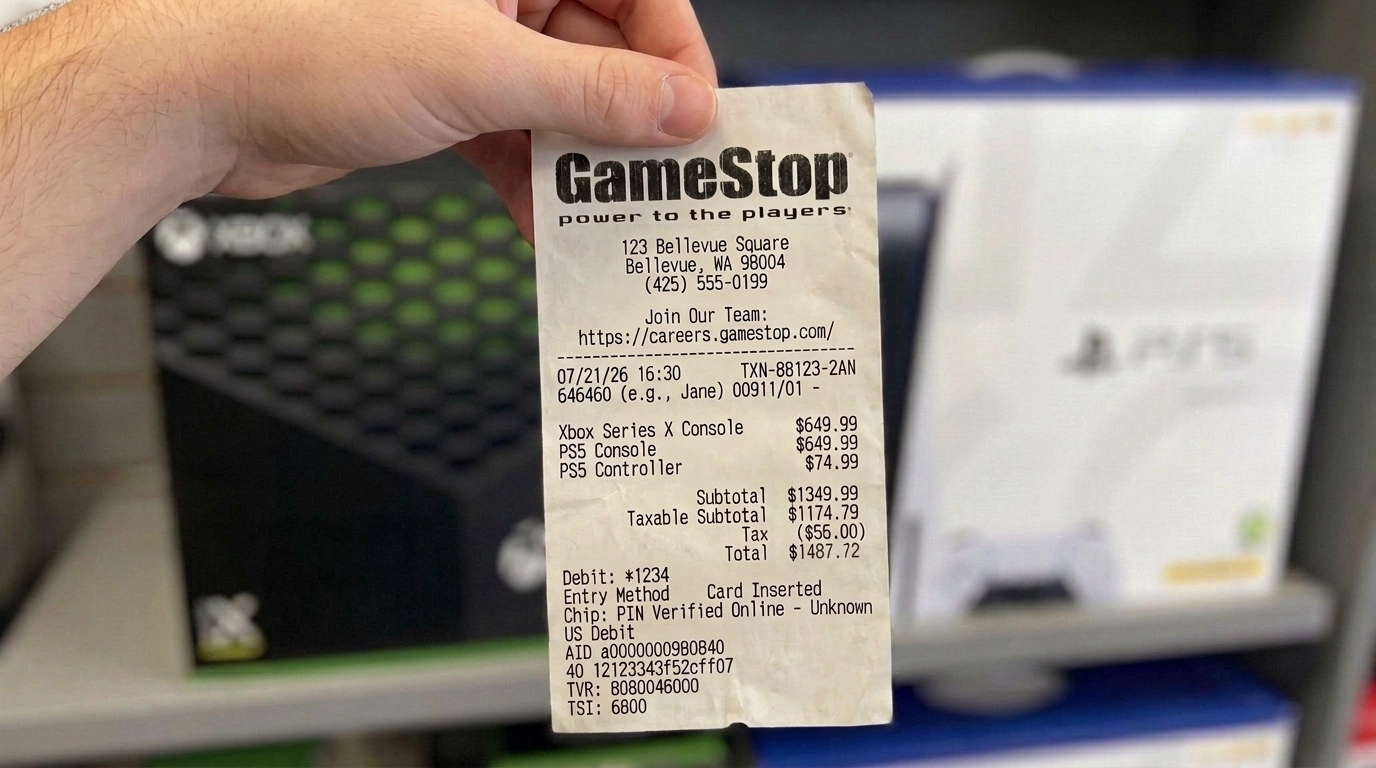
For four console generations, prices only fell after launch. That pattern just broke, hard, and in a window short enough to fit inside a single school year. As of October 2025, the Xbox Series X hit $649.99, a total $150 rise from its $499.99 launch price in November 2020. Then it kept going. Starting August 1, 2026, the cheapest Series X 1TB model without a disc drive retails for $749.99, the disc-drive model for $799.99, and the 512GB Series S now costs $499.99. That means an Xbox Series X disc model now costs $300 more than it did at launch, while the Series S is 50% more expensive.
Sony ran the same play. The PS5 disc edition went to $649.99, up $100; the Digital Edition to $599.99, up $100; and the PS5 Pro to $899.99, up $150. The PS5 launched in 2020 at $499.99 for the disc edition, and the disc model now costs $150 more than it did at launch, less than six years later.
The excuse is real. The framing is a choice.
Here's where honesty cuts both ways: the memory crisis is not made up. It's genuinely brutal. The industry is contending with an unprecedented surge in memory prices, which have jumped as memory makers direct stock to huge demand from AI data centers while supply stays tight. Samsung, SK Hynix, and Micron have collectively shifted 93% of their combined production toward high-bandwidth memory for AI data centers, leaving only a fraction of output for the general-purpose RAM used in consumer devices. It's the first time in modern memory that a gaming generation is getting more expensive as it matures, and suppliers themselves say relief is years away.
So the cost pressure is legitimate. The thesis isn't that they're lying about DRAM. It's that "memory costs" has become a clean, blameless story that conveniently covers a business decision the platform holders were already making.
Look at how the language is built. Sony said the change "was a necessary step to ensure we can continue delivering innovative, high-quality gaming experiences to players worldwide." In its announcement, Sony attributed the move to "continued pressures in the global economic landscape," declining to break down the specific component costs behind the decision. That's the tell. If memory were the whole story, you'd itemize it. Vague macro language does a different job: it makes a margin decision sound like weather.
Who actually gets priced out
The real damage isn't to the enthusiast who was buying a Pro anyway. It's to the entry point. The kid saving allowance, the parent buying one gift, the lapsed player deciding whether to come back. That buyer had a ceiling around $300 to $400, and it's gone.
Watch how the companies themselves are quietly conceding this. Reporting indicates Microsoft is pushing "Buy Now, Pay Later" and interest-free installment options, alongside certified refurbished consoles and trade-in paths. When you finance a game console like a refrigerator, you've admitted the impulse buy is dead. Xbox CEO Asha Sharma has said the company is exploring "radically different" business models for future hardware, citing the growing difficulty for mass audiences to afford consoles that cost thousands of dollars. That's the quiet part. They know.
The counterargument, taken seriously
The strongest pushback: margins on consoles were always thin, sometimes negative at launch, and platforms make money on software and subscriptions. If memory genuinely doubled the bill of materials, refusing to raise prices means selling hardware at a real loss with no console-war upside, since everyone hiked together.
Fair. But two facts strain the pure victim narrative. First, memory manufacturers continue shifting production capacity toward higher-margin server products, and TrendForce projects DRAM contract prices rising only 13% to 18% in Q3 2026, a marked slowdown from roughly 60% jumps in Q2, a cooldown driven by consumer manufacturers' unwillingness to absorb higher costs rather than by improved supply. Costs are decelerating; retail prices are not coming down. Second, Xbox also moved some first-party games from $69.99 to $79.99. Hardware, software, and services all rose at once. A pure cost pass-through touches one lever. This touched every lever.
The DRAM crunch handed the industry cover for a repricing it was drifting toward regardless. The casualty isn't the die-hard. It's the on-ramp itself, and no one holding a platform seems especially bothered about rebuilding it.