THE HOT TOYS RESALE MYTH: WHY FIRST-TIME 1/6 BUYERS MISREAD THE SIDESHOW QUESTION
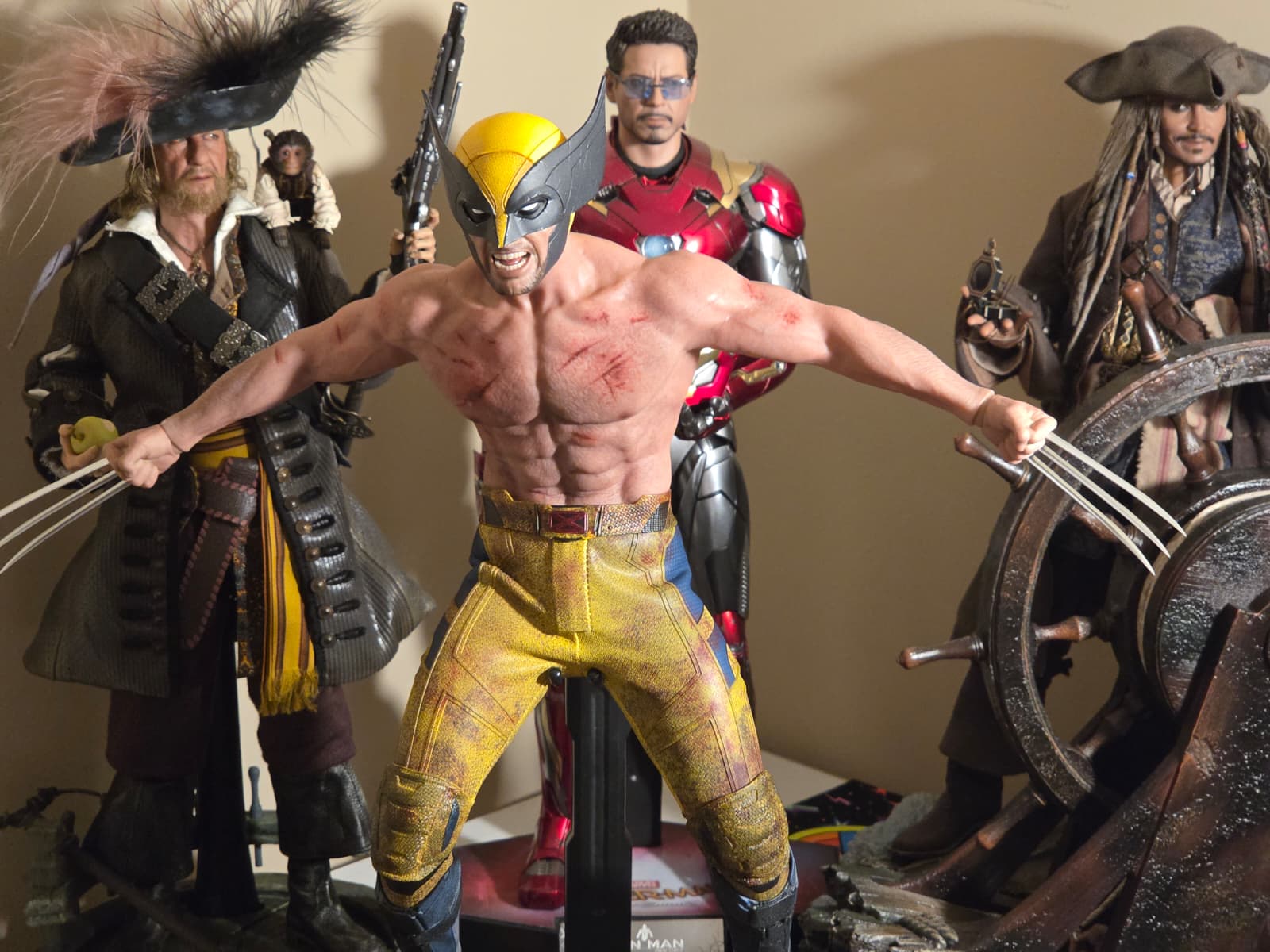
Walk into any sixth-scale collecting forum with a beginner's question and you'll get the same answer within three replies. Buy Hot Toys. They hold value. Sideshow doesn't. The advice is so universal it reads like physics.
There's a kernel of truth in it. Ask collectors directly and the verdict skews hard in one direction. Assuming you're talking about 1:6 scale figures, the nod currently goes to Hot Toys; Sideshow has made huge strides in sculpt and overall quality, but Hot Toys is at the top of the game when it comes to likeness and realism. On the face value side, the same story repeats. A data comparison shows that Hot Toys figures often have a higher resale value due to their limited production runs and high demand. So the conventional wisdom looks airtight: Hot Toys is the safe pick, Sideshow is the money pit.
Here's where the consensus misleads a first-time buyer. The "Hot Toys holds value" mantra isn't really a statement about the brand. It's a statement about scarcity, license demand, and timing that happens to correlate with the brand. Treat it as a brand law and you'll overpay for the wrong Hot Toys figure while ignoring a Sideshow piece that's quietly appreciating. The brand is a proxy. Stop buying the proxy and start buying the variable.
What the brands actually are
First, untangle the relationship, because nearly every beginner gets it wrong. The two companies are not the same and never merged into one. Sideshow Collectibles was established in 1994 as an artist collective of four friends working in a pool house backyard studio, originally creating toy prototypes for major toy companies such as Mattel, Galoob, and Wild Planet. Hot Toys came later and came from somewhere else entirely. The company was founded by Howard Chan, a former screenwriter for the Hong Kong television station TVB, who before launching the brand opened a small action figure shop in Causeway Bay called Cool Toys in the late 1990s.
What confuses people is the commercial plumbing. Sideshow is an American specialty manufacturer of movie, film, and television collectibles that also distributes Hot Toys collectible figures in the United States, North and South America, Europe, Australia, and throughout most Asian countries. So a US buyer often purchases a Hot Toys figure off Sideshow's website. Two companies, one storefront. That overlap is why a beginner sees "Sideshow" on the box of something everyone calls a Hot Toy.
The histories matter because they explain the quality gap collectors keep citing. In its early years Hot Toys focused on highly detailed 1/6th scale U.S. military figures, starting with an F-14 Tomcat pilot in 2000. That obsessive military DNA, sleeping on factory floors over a walkie-talkie wire, became the house style. By the time Hot Toys moved into film licenses, hyperrealism was already baked in.
The evidence behind the value claim
Now the part the mantra gets right, stated precisely. The thing driving Hot Toys appreciation is not the logo. It's supply. After an item has been released and sold through, there is almost never a second production run, which is a great thing for collectors because it helps protect the value of a collection. Limited runs plus controlled supply produce the appreciation stories everyone repeats. Limited runs, exclusivity, and licensing control mean certain figures gain value over time; for example, early Avengers-era Hot Toys like the Black Widow from 2012 now sell for over $800 in mint condition.
But read the same source two sentences further and the brand-law collapses. Not all Hot Toys hold value; mass-produced convention exclusives or figures from less popular franchises may stagnate or decline, and the key is demand, with characters from major films tending to retain or increase value while niche or poorly timed releases don't. That is the whole ballgame. The variable is character demand and scarcity, not the four letters on the box.
And collectors who've actually tried to cash out are blunter than the forum cheerleaders. One long-running secondary-market thread is brutal on the investment fantasy. Don't believe your 1/6 figures will increase in value or even retain value; nine times out of ten they don't, and out of hundreds of Hot Toys released in a year you can count the ones that appreciated on the fingers of one hand. The handful that climb tend to be marquee characters in limited editions. On the secondhand market these limited edition pieces, generally no more than 3,000 made, retain and grow in value much better than average.
The reframe
So here's the reframe a beginner needs. "Hot Toys holds value, Sideshow doesn't" is a statistical artifact, not a rule. Hot Toys earns the reputation because its catalog skews toward exactly the things that appreciate: blockbuster Marvel, DC, and Star Wars licenses, limited runs, and no reprints. Sideshow's catalog historically skewed toward original characters, comics properties, and statues, categories with thinner resale demand. Same scarcity mechanics, different license mix. The brand didn't make your figure go up. The character and the print run did.
This is why the consensus is dangerous as a shortcut. Follow it literally and you'll pay Hot Toys money for a B-tier character from a forgotten film, then watch it sink, while assuming "it's a Hot Toy, it'll be fine." It won't. Meanwhile you'll skip a low-run Sideshow piece in a category Sideshow actually dominates, the aliens, creatures, and non-human sculpts where the old paint-on-human-faces weakness never applied.
The honest counterargument
The strongest case for the brand shortcut is that proxies are useful precisely because beginners can't evaluate the real variable. A first-timer can't reliably forecast which character stays hot or which run is genuinely scarce. "Just buy Hot Toys" is a heuristic that works often enough to protect a novice from the worst mistakes. Fair.
But that defense quietly concedes my point. The heuristic works because Hot Toys' product mix correlates with the real driver. The moment a beginner can read a print run, a license tier, and current character demand, the brand label stops adding information. And there's a cost to leaning on the proxy: it teaches you to overpay for the logo and to treat figures as assets, which the people who've actually sold them will tell you is the wrong frame entirely. The view of these as investments is already the wrong way to purchase 1/6 figures.
Why this matters now
The market keeps validating the deeper read. Prices have climbed across the board, with Hot Toys figures often retailing for $250 to $300 and premium editions pushing past $400. At those numbers, "buy the brand" is an expensive way to be approximately right. The reframe is also more durable than the mantra, because competitors like ThreeZero and Blitzway now produce figures that complicate any tidy brand ranking. The character-and-scarcity test still works across all of them. The brand-loyalty test does not.
Buy the figure you'd be happy to never sell. If you also want it to hold value, ignore the logo and interrogate the run size, the license, and how badly people will want that exact character in five years. The brand was never the answer. It was just standing where the answer happened to be.