THE MOVE THAT KILLED 3DFX IS NOW HOW NVIDIA WINS
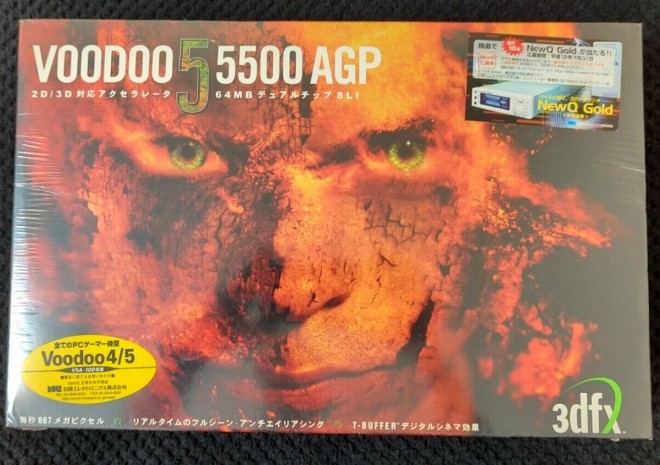
If you started gaming after 2001, the name 3dfx probably means nothing to you. If you started before it, the word "Voodoo" still does something to the part of your brain that remembers the first time a game stopped looking like a slideshow.
For about four years, 3dfx Interactive was 3D gaming on the PC. It shipped the first consumer 3D accelerator that mattered, the Voodoo Graphics, in 1996. It was a strange product by today's standards. The card did nothing but 3D, so you needed a separate 2D card alongside it, the two literally chained together with a passthrough cable. Nobody cared, because when a Glide game lit up, it looked like the future. Developers built around 3dfx's proprietary Glide API. Quake ran on it. The Voodoo2 in 1998 let you run two cards in tandem for double the power, a trick called SLI that should sound familiar. For a brief window, owning a Voodoo card was the whole point of owning a gaming PC.
Then, in about two years, the company was gone. Nvidia bought what was left for roughly $110 million in cash and stock in December 2000 and switched off the lights. By 2002 it was officially defunct.
The story everyone tells
Ask around and you will hear the same explanation. In late 1998, 3dfx bought a board manufacturer called STB Systems. Up to that point, 3dfx sold its chips to companies like Diamond and Creative, who built and sold the actual cards. After the STB deal, 3dfx decided to build its own branded cards and stop supplying everyone else. The received wisdom is that this was the fatal act of greed. It cut off the partners who had built the ecosystem, those partners ran straight into the arms of Nvidia and ATI, and 3dfx strangled itself trying to own the whole pie.
It is a clean story. It is also, on its own, wrong, and you can prove it with one observation: the move everyone calls suicidal is now the standard operating model of the most successful hardware companies in the world.
The "mistake" won
Look at who controls their own stack today. Nvidia sells its own Founders Edition cards directly, in-house design, in-house branding, competing with the very board partners it supplies. Apple threw out Intel and now designs the silicon, the device, and the operating system as one closed loop, and it is the most profitable hardware operation in history. Every game console is a vertically integrated box where the platform owner controls hardware, store, and a cut of every sale. The entire industry spent the last fifteen years walking deliberately toward the thing that supposedly killed 3dfx.
So vertical integration is not the villain. Owning your manufacturing and your channel is, in 2026, simply how you capture margin and control quality. 3dfx saw that years before it was conventional. On the strategy, they were early and they were right.
Which means the real question is not "why did vertical integration kill them." It is "why did the right strategy kill this particular company at this particular moment."
Timing is a strategy, and theirs was terrible
Two things were true at the exact moment 3dfx made its bet, and together they turned a sound long-term strategy into a short-term execution.
First, their core technology had quietly stopped improving. This is the part the greed narrative skips. From the original Voodoo through the VSA-100 chips at the end, the engineering story was mostly "the same idea, faster, or two of them bolted together." Competitors were not standing still. In 1999 Nvidia shipped the GeForce 256 and called it the first GPU, moving transform and lighting onto the chip itself, a genuine architectural leap. 3dfx answered with more clock speed and more chips per board. When your product roadmap is a multiplication problem, you are not leading anymore, you are buying time.
Second, they made the most disruptive possible business change at the worst possible moment to make it. Absorbing a manufacturer, standing up your own production, and firing your entire sales channel is a massive operational shock even when everything else is going well. 3dfx did it while its technical lead was evaporating and its cash was thin. They handed Diamond and Creative a reason to leave at the precise moment Nvidia had a better chip to sell them. The pivot did not fail because it was the wrong destination. It failed because they tried to sprint across the bridge while the bridge was on fire.
By late 2000 they understood it. They stopped making their own cards in November and tried to go back to selling chips to anyone who would buy them. There was no one left to sell to.
The lesson worth keeping
Here is the part that transfers beyond old graphics cards, and it is the opposite of the usual moral.
The standard takeaway from 3dfx is "don't get greedy, don't try to control everything." That advice is actively bad, because controlling everything is what won. The real lesson is about what a bet-the-company strategic pivot usually means.
When a company that built its name on product leadership suddenly reinvents its business model, the pivot is often not the disease. It is the symptom. 3dfx reached for vertical integration in part because the thing that used to win for them, raw graphics performance nobody could match, had stopped being a guaranteed win. The big strategic move covered for a quieter problem on the engineering side. And because everyone remembers the dramatic move, the dramatic move gets the blame, while the stalled core that triggered it gets forgotten.
You can run this test on almost any famous corporate collapse. Find the bold pivot everyone points to as the cause, then ask what was going wrong with the core product in the year before it. The pivot is usually a company trying to out-strategy a problem it should have out-engineered.
3dfx invented consumer 3D and then got outbuilt at the exact moment it tried to out-maneuver. Nvidia took the patents, the SLI idea, and a good chunk of the engineering talent, and used the same vertical-integration playbook 3dfx died attempting. The difference was never the strategy. It was that Nvidia layered it on top of a chip that kept getting genuinely better, and 3dfx used it to paper over one that didn't.
The Voodoo cards still boot in retro rigs today, still running Glide, still looking, in their way, like the future they briefly were. The company that made them is a case study in a single uncomfortable idea: being right about where the industry is going does not save you if you arrive before you can afford the trip.